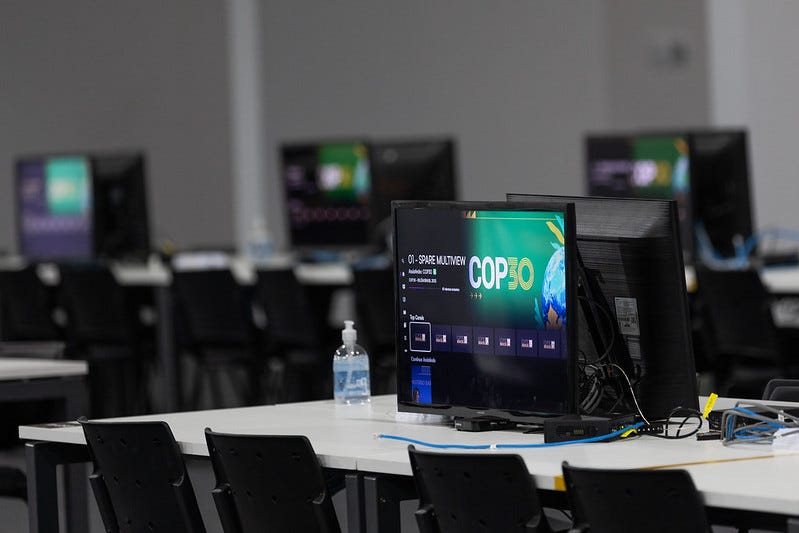
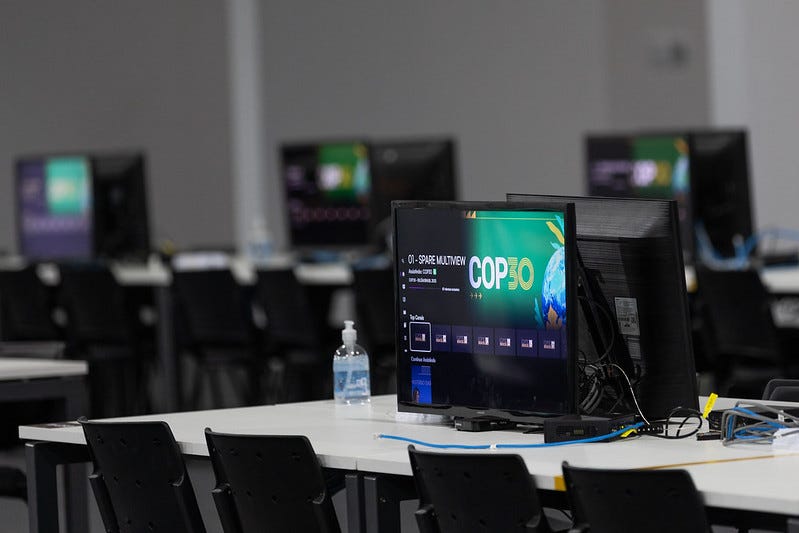
Each UN Climate Change Conference of the Parties (COP) is a whirlwind of activity, with thousands of delegates and media jostling for attention. At COP30 in Belém, Brazil, nearly 4,000 media professionals registered, potentially the largest media turnout in the history of COP. With such high stakes and saturation, how can PR and marketing professionals ensure their organisation’s voice is heard during and after the summit? This guide provides practical and strategic tips for gaining visibility both on the ground at COP and through digital channels, applicable not only to COP30 but also to future climate conferences. From overcoming language barriers to leveraging WhatsApp groups, from capturing multimedia stories to smart post-event follow-up, these insights will help you cut through the noise with clarity and impact.
On the Ground at COP: Make Connections That Count
Attending a COP in person presents unique opportunities — and challenges — for getting noticed. Relationships are key: face-to-face interactions can spark media interest in ways press releases alone cannot. Begin by identifying journalists, influencers, and delegates relevant to your agenda and seek out chances to meet them. This could mean attending side events, roaming the pavilions, or even striking up conversations in coffee queues. Flexibility helps — don’t just stick to sessions in your comfort zone. As one communications guide notes, being present beyond your main thematic days and exploring the wider venue can broaden your network and uncover unexpected opportunities. In short, serendipitous hallway chats or an introduction at a reception might lead to an interview or collaboration later on.
Break through the formalities with informal engagement. Journalists on-site are often overwhelmed by the deluge of official briefings and announcements; many appreciate a human touch or an exclusive angle. Instead of relying solely on formal press conferences, be prepared to offer informal interviews or provide quick commentary on breaking developments. If your organisation’s experts are on the ground, have them available for impromptu Q&As. Even a brief but insightful remark in the corridor can put your spokesperson on a reporter’s radar. Remember that relationship-building is a long game: use COP as a chance to build rapport that lasts beyond the event. A friendly coffee chat or helping a reporter find a source can establish goodwill that leads to future media coverage.
One powerful but often underused tool at COP is WhatsApp (or similar messaging groups). Journalists and PR officials frequently coordinate via WhatsApp groups, sharing tips and arranging meetings amidst the chaos. Find out if there are WhatsApp broadcast lists or group chats for media at the conference — for example, the climate think tank E3G ran a WhatsApp broadcast to keep COP28 journalists updated. Joining these channels (or creating your own) can provide you with real-time insight into what reporters are looking for and enable you to quickly disseminate your key news or respond to queries. It’s a less formal, more conversational medium, perfectly suited to cutting through when everyone’s inbox is flooded. Just be mindful of group etiquette: contribute valuable information rather than pure self-promotion, and respond promptly if a journalist reaches out via these apps.
Finally, respect and prepare for language differences on the ground. COPs are inherently global, and while English tends to dominate proceedings, not everyone is comfortable operating in a second language. If you have spokespeople who aren’t fluent in the conference’s main language, arrange interpretation or prepare bilingual talking points. Provide press materials in multiple languages (for COP30, ensure you have Portuguese versions for Brazilian media, alongside English). This effort can dramatically expand your reach, as the host country’s media presence is usually the largest on-site.. Language barriers have real consequences — non-native English delegates have reported feeling that mistakes in English can lead to misperceptions or a loss of credibility. Don’t let language be the reason your story gets lost: meet journalists and audiences where they are most at ease. In short, being culturally and linguistically prepared is part of being a good host to the media at your pavilion or press event.
Digital Engagement: Amplify Your COP Presence Online
In parallel with on-site efforts, a savvy digital strategy will amplify your voice far beyond the conference halls. Start by harnessing the power of social media and online content to join the global conversation on climate change and the COP. Use official and trending hashtags (e.g., #COP30, thematic tags like #ClimateFinance or #Forests) and tag relevant organisations and influencers to boost your visibility. This targeted tagging and hashtag use ensure your posts show up in the streams that COP followers (including journalists) are watching. It’s a simple step that can significantly increase engagement and put your content in front of the right eyes.
Plan and pace your content throughout the event to ensure a smooth experience. In the days leading up to COP, have a content calendar ready, schedule posts highlighting your goals, planned activities, and expert insights, but also be prepared to post in real time as news breaks. Visuals are especially key on social channels crowded with COP updates. Share short video clips, striking images, and quotable soundbites from your team on the ground. For example, if your CEO speaks at a panel, a 30-second video of their best quote can be posted quickly on X (formerly Twitter) or LinkedIn to catch attention while the topic is still fresh. One agency recommends scheduling compelling visuals and videos in advance, while remaining agile enough to adapt to emerging trends during the conference. In practice, this means you might draft some posts ahead of time (such as messages aligned with anticipated thematic days) and also have a team member back at home base monitor online discussions to capitalise on opportunities (e.g., responding to a popular journalist’s tweet with a relevant insight from your organisation).
Another digital tactic is to host virtual content for those not in Belém. Consider streaming your COP side event or hosting a webinar briefing live from the venue to reach a wider audience. Not only does this broaden your reach, it also creates recorded material you can repurpose later (more on multimedia storytelling shortly). Engaging digital audiences during COP can also mean collaborating with partner organisations to co-promote content. By cross-posting updates or doing Instagram Live takeovers with partners, you tap into each other’s followers and show unity on issues — an important signal at a collective event like COP.
Crucially, remember that audience engagement online can combat oversaturation. When newsfeeds are overflowing with climate summit headlines, one way to stand out is by fostering interaction. Ask questions, run quick polls (“What COP30 announcement gives you hope?”), or encourage user-generated content (perhaps a hashtag challenge related to your cause). This not only boosts your algorithmic visibility but also demonstrates that you’re listening, not just broadcasting. It can be as simple as prompting followers to share their own stories or solutions related to a COP theme your organisation cares about. The more genuine conversations you spark, the more your message will stand out amid the noise of COP.
Navigating COP’s Key Challenges: Media Saturation, Access and Language
Even with stellar on-site networking and digital savvy, COPs pose distinct challenges for communicators. Three in particular stand out: (1) oversaturation of stories, (2) difficulty accessing top-tier media, and (3) language and cultural barriers. Tackling these head-on will increase your chances of being heard.
- Cutting Through Story Overload: The volume of news coming out of a COP is staggering. Major announcements from governments, NGOs, businesses and activists all compete for column space and airtime. “It is an incredibly saturated space,” as one communications expert put it. Journalists on the ground are inundated — over 3,500 reporters covered COP29 in 2024, and even more are expected to attend COP30. To make editors choose your story, you must demonstrate why it truly matters. This means framing your news within the context of broader COP themes and pressing issues. If, for example, your organisation is unveiling a clean energy initiative, tie it explicitly to COP’s goals (e.g. how it advances the renewables tripling target or supports developing nations). Be clear about the unique value or data point you offer that others don’t. A good litmus test is to ask internally: “Will this cut through? Is it credible and compelling enough?”. If not, refine your angle or hold off. It’s better to do one announcement that lands powerfully than ten that fizzle in the noise. In short, quality over quantity in your COP communications is essential — focusing on a few well-crafted messages or events will have a greater impact than a scattergun approach.
- Reaching Top-Tier Media: Prominent international outlets (BBC, Reuters, The Guardian, et al.) heavily cover COP, but securing their attention is easier said than done. They tend to chase the big stories — national pledges, heads of state speeches, and dramatic protest actions — which can sideline the news of smaller organisations. To improve your odds, prepare well before COP. Research which journalists have historically covered the topics relevant to you, and start a dialogue in advance. Offer them something useful, such as a briefing note, an exclusive scoop, or access to a compelling spokesperson. During COP, monitor what the top-tier reporters are writing or tweeting about, and timing is everything — if you know a key draft agreement is coming out on Wednesday, pitch your expert’s analysis of it by Tuesday night so they can be included in next-day stories. Also, don’t underestimate the value of niche and trade media. While your ultimate goal may be a quote in The New York Times, a specialised climate or energy outlet might be more receptive and can still influence the conversation. Often, big media pick up on analyses and stories first reported in respected niche publications. Build relationships with these sector reporters as well, as they can serve as multipliers for your message.
- Overcoming Language Barriers: As discussed in the on-ground section, language can be a hidden roadblock in getting noticed. This applies not only to speaking but also to your written materials and storytelling style. COP audiences range from policy wonks to local community leaders, and from English speakers to those following coverage in French, Spanish, Arabic, Chinese, Russian and beyond. Wherever possible, provide translations of your press releases and social content. Even a brief summary in the host country’s language (Portuguese for COP30) on your website or social feed can invite local press interest that an English-only approach would miss. Additionally, strive for clarity and avoid jargon in all communications — climate negotiations are full of technical terms that can alienate or confuse even interested readers. If your story is complex, use analogies or human examples to make it relatable. Communicating in an “appropriate language and analogy, combining… narrative storytelling [with] visual imagery” is vital to engaging diverse audiences, as one COP28 communicator observed. In practice, this could mean illustrating your point with a human story (e.g., a community benefiting from your project) and using infographics or photos to transcend language barriers. By being linguistically inclusive and narrative-driven, you’ll resonate with a broader press pool and public.
Capture the Moment: Multimedia Storytelling During and After COP
In the frenetic environment of a COP, it’s easy to focus only on the present. However, savvy communicators look at the summit as a content goldmine for future storytelling. The idea is simple: collect rich multimedia assets now, during the event, and use them to keep your story alive afterwards.
Record, film, snap — and save everything. Make it a priority to have someone on your team serve as a storyteller on the ground, armed with a camera or smartphone. Whether it’s your delegates delivering a statement, a busy scene at your exhibition booth, or an interview with a partner organisation, capture it. These photos, videos and audio clips are invaluable for post-COP content. As a storytelling guide notes, once the event is over, you can’t go back and gather material, so “be sure to take pictures, make recordings, and save them” while you have the chance. Even if you don’t immediately know how you’ll use a particular footage or quote, archive it — it could become the hook for a future campaign or an emotive piece of content months later.
Think creatively about multimedia: short-form videos from COP can be turned into a highlights reel or social media series; audio snippets might become a podcast episode or audio quote for journalists; photographs can enrich blog posts, reports, or press kits long after the summit ends. For instance, if your CEO met with other leaders at COP, a candid photo of that meeting could accompany a follow-up story on the partnership that emerged. Visual evidence of participation lends credibility and interest — it’s proof your organisation was in the thick of the action.
Another tip is to collect human-centric stories on site. COPs are teeming with interesting people: activists, indigenous leaders, scientists, and youth delegates. With permission, record short testimonial videos or conduct mini-interviews relevant to your cause area. These personal narratives can be woven into your post-COP communications to add colour and authenticity. An example: if you’re a clean water NGO, a 2-minute video of a frontline community representative you met at COP speaking about water challenges could powerfully supplement your press release about the outcomes of COP on adaptation. Such multimedia storytelling helps transform abstract negotiations into relatable impacts, increasing the likelihood that your content will engage the media and public.
And remember, COP organisers themselves often provide content resources. The UNFCCC and the host country typically release official photos and videos daily for free use. Don’t hesitate to leverage this — perhaps the official “family photo” of leaders, or B-roll of plenary halls, to complement your own materials. Combining official high-quality visuals with your organisation’s story can make your post-COP recap or report more professional and shareable.
The Power of Follow-Up PR: Keeping the Momentum After COP
All too often, organisations breathe a sigh of relief when the COP ends — but the days and weeks immediately after can be one of the best times to secure media coverage. The big announcements might be over, but analysis and reaction pieces are just beginning, and competition for attention diminishes once the circus leaves town. Savvy communicators plan a post-COP PR blitz to capitalise on this window.
In the aftermath of COP, journalists and audiences alike are digesting what transpired. Many outlets run stories like “What did COP30 achieve?” or “The next steps after COP”. Position your organisation as a knowledgeable commentator in this phase. For example, pitch an op-ed or expert interview that evaluates an outcome of the conference, tying it to your mission. If you made commitments during COP, now is the time to issue a follow-up press release detailing those commitments with added context and forward-looking statements. You might find reporters more receptive now — they have a bit more bandwidth than during the summit and are looking for fresh angles on climate action beyond the summit rhetoric.
Ensure that you share any wins or interesting observations from COP both internally and with your stakeholders (clients, donors, and partners) in the days following. A post-event email newsletter or blog post can serve dual purposes: it keeps your stakeholders informed and also provides a linkable summary that media can cite or draw from. Highlight key moments — for instance, “Our project was featured in the COP30 Innovation Showcase” or “We met with delegates from X country and forged a new partnership”. These details reinforce that your organisation was active and making an impact, which can be compelling for journalists working on trend stories (“NGOs form alliances at COP30” etc.).
Critically, shape your post-COP messaging to inspire and avoid “climate fatigue.” After two weeks of intense negotiations, there’s often a mix of hope and cynicism in the air. Audiences may feel exhausted by constant climate doom or simply tune out if nothing seems new or different. To combat this, frame your follow-up communications around solutions, progress, and the human side of climate action. As one digital communications team advises, focus on inspiring hope and action after the event — celebrate wins and forward momentum — rather than rehashing grim news that might wear out your audience. If COP didn’t go as far as hoped on a certain issue, your tone can stress determination: e.g. “The deal wasn’t perfect, but it gives us a platform to push for more finance — and we’re already working on XYZ as the next step.” This keeps your audience engaged and positions your organisation as proactively leading into the next phase. Indeed, communications experts note that maintaining momentum after COP is crucial, ensuring the surge of interest translates into ongoing action. By staying present in the conversation after the summit — when many others fall silent — you demonstrate leadership and continue to earn media attention.
Conclusion: Be Strategic, Be Engaging, Be Persistent
Gaining visibility at a COP — whether COP30 in the Amazon or any future summit — requires a blend of preparation, agility, and genuine engagement. The conference itself is just one peak in the long journey of climate communications. To recap, on-site at COP, you should prioritise relationship-building (through informal interactions, networking events, and messaging groups) and proactively navigate logistical challenges, such as language barriers. Online, amplify your voice with smart social media use, live updates, and interactive content to reach far beyond the venue. Always contextualise your story against the backdrop of a crowded media landscape, focusing on what makes your message unique and worthy of attention amid an “incredibly saturated” arena. Collecting rich multimedia assets ensures that your efforts endure, enabling you to tell compelling stories even after the summit hype has subsided. And don’t forget the final phase: follow-up. Often, the real world-changing work begins after the diplomats fly home — and so should your communications. A well-timed post-COP campaign can capitalise on the wave of media interest while others have packed up, keeping climate action in the spotlight when it needs to be most.
By applying these strategies, PR and marketing professionals across sectors can turn the daunting challenge of a COP into an opportunity. You’ll not only gain visibility during those high-profile two weeks, but also set the stage for sustained engagement thereafter. In a cause as urgent as climate change, our stories and voices must continue to resonate long after the conference lights dim. With clear goals, creative tactics, and an authentic commitment to relationship-building, your organisation can indeed stand out — at COP30 and beyond.
Useful Takeaways:
- Plan ahead and set goals: Define what you want to achieve at COP (e.g. media coverage, partnerships, policy influence) and tailor your engagement strategy accordingly. Preparation — from research to key messaging — is essential to stay focused amid the COP hubbub.
- Leverage thematic days and trends: Align your content with the COP’s daily themes and major trending topics to capitalise on existing interest waves. However, stay flexible and ready to pivot if a new opportunity arises or the conversation takes a different direction.
- Be a resource to journalists: Make reporters’ lives easier by providing clear, newsworthy angles, access to experts, and quick responses. Contact key media in advance. Use WhatsApp or in-person chats during COP to offer help, and follow up afterwards with fresh insights.
- Think multilingual and multicultural: Bridge language gaps by having bilingual spokespeople or translated content. Demonstrate cultural awareness in your storytelling — what resonates in one region may need to be reframed in another. COP is global; your communications should be too.
- Collect and curate content: Treat COP as a content creation spree. Document everything (photos, videos, quotes) because these assets will fuel your post-event storytelling. Authentic visuals and narratives from the field give your communications longevity and credibility.
- Sustain the story post-COP: Don’t disappear when COP ends. Capitalise on the post-summit window with follow-up stories, hopeful messaging to combat fatigue, and continued engagement. This is when you can deepen impact while others wind down.
By integrating these approaches, you’ll build a robust PR playbook for climate conferences — one that not only gains visibility in the moment, but also advances your organisation’s reputation and cause long after the COP banners come down. Good luck at the next summit!
Gaining Visibility at COP30 and Beyond: A PR Guide to Climate Summits was originally published in Purpose and Social Impact on Medium, where people are continuing the conversation by highlighting and responding to this story.
