Picture the scene: two countries in the same UN regional club fighting over a climate summit like territorial seagulls wrestling over a single chip. That’s COP31 in a nutshell. Or rather, in a particularly chaotic pistachio shell.
Hosting a COP is usually the most tedious process in global diplomacy — a rotation among UN regional groups, a straightforward decision, and perhaps a hint of smugness from the winning capital. The hosting country becomes COP President, runs the show, and everyone nods politely. As long as a region reaches a consensus, the venue is agreed upon, and the circus moves forward. The UNFCCC even has a failsafe: if the group can’t agree, the summit defaults to Bonn, Germany. That has never been triggered.
Until now, it came close enough for everyone to start checking flight prices to Bonn.
The trouble began when both Turkey and Australia submitted bids to host the 2026 conference — COP31 — within the Western Europe and Others Group (WEOG). Consensus is required. One “no” sinks the whole thing. Turkey said no. Australia said no to Turkey’s no. And Germany, chairing the group, said, “For the love of all things climate, please stop this.” Reuters described the stalemate as “unhelpful” — a diplomatic understatement on par with calling the Amazon rainforest “a bit leafy”.
What followed was three years of what one might politely call dithering. Less politely: a geopolitical arm-wrestle with climate negotiators as unwilling spectators.
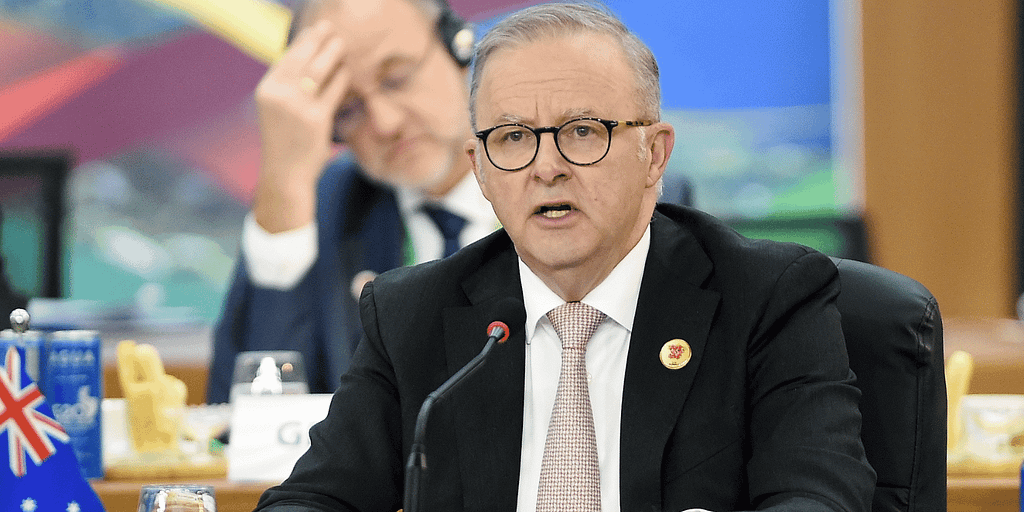
Australia attempted to frame its bid as a “Pacific COP,” arguing that the Pacific, which is literally disappearing under rising sea levels, had never hosted a conference of this kind. Australian Prime Minister Anthony Albanese touted it as a regional moment of solidarity. Pacific Island nations backed them enthusiastically. They wanted their lived reality at the centre stage, and Australia promised them it would be.
Turkey, meanwhile, wanted Antalya — a Mediterranean resort city and Erdoğan’s preferred stage set — to be the beating heart of COP31. Ankara insisted it was uniquely placed to “bridge” the Global North and South, a role it often claims when convenient. The fact that Turkey had little visible WEOG support did not deter it. At all. Ever. Not even slightly.
At one point, it genuinely looked like the default-to-Bonn clause would be triggered. Germany publicly begged the pair to agree: “We do not want to,” Jochen Flasbarth admitted. Desperation seeped through every line of that statement.
Diplomatically speaking, when Germany says “no thanks,” things are dire.
Australia didn’t help itself by changing positions faster than a climate activist at a police kettle. One day, Albanese was insisting that co-hosting “isn’t provided for under the rules” and therefore impossible. The next day, facing the prospect of the whole summit collapsing into a default in Bonn, he said that Australia “wouldn’t veto” Turkey hosting after all. The Guardian described Australia’s sudden shift as a “mixed message,” which is a gentle way of saying “complete backflip.”
For a bid that once claimed near-unanimous support within the region, that wobble was a gift-wrapped invitation for Turkey to hold its ground, which it did, with gusto.
Meanwhile, Australian domestic critics were calling the prospective Adelaide summit a “US$1 billion vanity project,” accusing the government of chasing prestige while ignoring local energy transitions and the cost-of-living crisis. That line stuck. Government backers were suddenly quieter. The political appetite visibly cooled.
Nothing kills a climate summit bid quite like a billion-dollar price tag.
By mid-COP30 in Belém, the whole thing had become an unmissable sideshow. Delegates whispered about the Turkey–Australia standoff in the corridors. Negotiators grimaced. Pacific island officials fumed quietly. The sense of absurdity grew by the hour.
And finally — finally — someone blinked.
Reuters broke the news: Turkey will host COP31 in Antalya, and Australia will lead the negotiations as COP president. A pre-COP meeting will take place in a Pacific Island nation to honour the commitment Australia made to its regional partners.
It’s a workaround. It’s a fudge. It’s also unprecedented.
This type of split arrangement has occurred only once before — when Fiji presided over COP23, but Germany hosted it. But that was deliberately designed to help a small island nation. It wasn’t the result of a geopolitical game of chicken. This time, the split isn’t symbolic. It’s a forced peace treaty.
Politico put it bluntly: “Turkey just wants to showboat … Aussies do, but they don’t control the event.” In other words, both sides get to preen — but neither gets everything they wanted.
Diplomacy: where everyone loses just enough to call it a win.
For Turkey, the optics are superb: a major global event in Antalya, a boost to international prestige, and a chance for Erdoğan to play statesman on home turf.
For Australia, the reward is quieter but arguably more strategic: control of the negotiation process at a time when climate finance, equity and adaptation are about to dominate global debate. Minister for Climate Change and Energy of Australia, Chris Bowen, will wield the gavel even if Erdoğan owns the stage. That means Australia can shape deals and messaging without footing the hosting bill.
From a public health and climate lens — the intersection you live in, Chris — this mess reveals something deeper. Hosting a COP is no longer just about logistics or diplomatic choreography; it is also about fostering meaningful engagement and collaboration. It’s signalling. It’s power. It’s narrative control. Australia wanted the Pacific story. Turkey wanted the geopolitical prestige. Both wanted global visibility.
And all the while, the climate continued to warm. The health impacts continued to stack. The global South continued waiting.
Crisis doesn’t pause for diplomatic theatre.
What this saga shows is that climate diplomacy has become a stage for domestic politics, regional factions and global image-making — sometimes at the expense of urgency. The negotiations needed leadership. Instead, the world watched a stand-off that stole time, attention and momentum.
Still, the odd-couple arrangement is now official. Turkey gets the lights and cameras. Australia gets the microphone. And the world gets a COP that will be unlike anything before it — part climate summit, part geopolitical marriage of convenience, part “please never let this happen again” administrative cautionary tale.
At least Germany can finally exhale. Bonn can go back to being the bridesmaid, not the bride.
And for everyone else? The moral is simple: when it comes to climate politics, never underestimate the power of ego, ambition and beautifully stubborn national pride.
Because sometimes the real drama of a COP doesn’t happen in the plenary.
It happens in the bidding.
Turkey Hosts, Australia Chairs: COP31’s Odd-Couple Climate Summit was originally published in Purpose and Social Impact on Medium, where people are continuing the conversation by highlighting and responding to this story.
