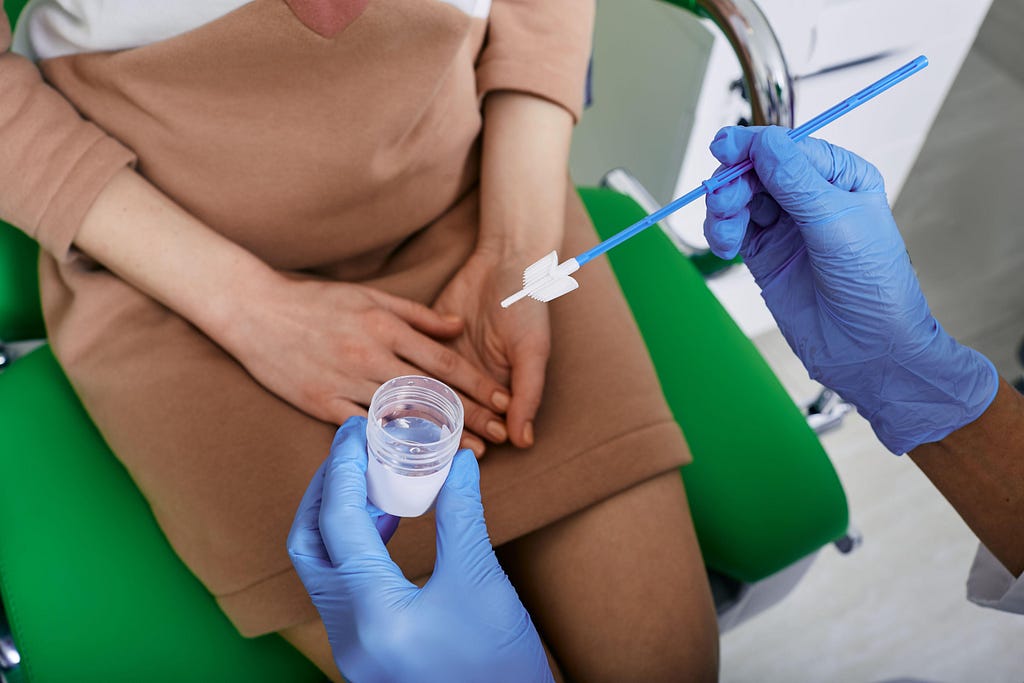

Most people assume cancers are beaten in laboratories. For cervical cancer, that part is done. A vaccine against the virus that causes it has been in use since 2006, a reliable test for that virus exists, and precancerous changes can be treated before they turn into cancer. World Cervical Cancer Elimination Day falls on 17 November, the first world health day created to get rid of a single cancer, and this year the World Health Organization is putting a blunt question to governments, charities and clinicians alike: “What will it take to eliminate cervical cancer?”
The laboratory has little more to add. The answer is being worked out on doorsteps.
One of those doorsteps is in Janakpur, a city in Madhesh Province on Nepal’s southern plains. Nepal has a corps of Female Community Health Volunteers, local women who have spent years steering their neighbours towards vaccination days and antenatal checks. WHO’s account of the country’s 2025 HPV vaccination drive shows them checking each girl’s details and walking her to the vaccination room. One volunteer explained that families listen to her because they have known her through years of government health campaigns. In 2025, the US cancer non-profit Binaytara, which has run a cancer clinic in the city since 2018, held HPV screening at two community health fairs. Most of the women who turned up had never been tested for anything of the kind. The volunteers did much of the persuading.
Those volunteers are the thread worth following.
What Does Eight Per Cent Look Like?
Cervical cancer kills more than 350,000 women a year. The WHO strategy adopted by governments in 2020 sets three targets for 2030, known as 90–70–90. Countries are to vaccinate 90 per cent of girls against HPV, screen 70 per cent of women with a high-performance test by 35 and again by 45, and treat 90 per cent of those found to have disease. In Nepal, it is the leading cause of cancer death among women, taking an estimated four lives a day.
On the first target, Nepal has a good story to tell. A national campaign launched in February 2025 reached 1.46 million girls, 94 per cent of those eligible, and the vaccine is now part of the routine schedule. Those girls will grow up largely protected. Their mothers will not, because a vaccine given at ten does nothing for a woman of 40 who was infected years ago. For her, the only protection on offer is screening.
Even the vaccination success is uneven. Binaytara says nearly 30 per cent of eligible girls in Madhesh went unvaccinated. A national average can hide a province.
In Madhesh, only 8 per cent of women have ever been screened.
Eight per cent, against a target of 70.
The Cheap Half of Cervical Cancer Elimination
Binaytara’s pilot used AmpFire, an isothermal HPV assay that runs at room temperature and needs no cold chain. Clinicians collected the samples in the pilot. In the next phase, a woman will be able to collect her own with a dry swab, without a clinical examination. Jin Mou, an implementation science researcher at the organisation’s research institute, and her colleagues expect to hold the cost at roughly $5 to $10 a sample. About 12 per cent of the women tested carried high-risk HPV, more than double the rate of around 5 per cent in a comparable Indian study. Scaled against census data, Binaytara estimates that as many as half a million Nepali women may be carrying the virus unawares.
There are gaps in the picture, obviously. The half-million figure is an extrapolation from one small pilot in one city, and the per-test cost is a projection that no independent audit has checked. The team has since published a scoping review of isothermal assays in low- and middle-income countries, which is useful background and no substitute for a larger trial.
Nor is a positive result a diagnosis. The assay can produce false positives, and Binaytara treats a positive as a flag for free follow-up by colposcopy and biopsy. Mou’s argument is that a population which has never been screened is better served by an early warning it can afford than by a gold-standard test it will never be offered.
The test, though, is the cheap half. So what is the expensive half?
Trust, mostly. A survey of 274 women screened at the fairs, presented at the 2026 ASCO Annual Meeting, found that those with secondary education had more than four times the odds of having heard of cervical cancer. Women aged 30 to 44 took their screening information from community health volunteers more than from doctors or nurses. Women whose health decisions were made by their husbands or in-laws understood less about what the test entailed. An earlier cluster-randomised trial elsewhere in Nepal had already found that a volunteer-delivered intervention increased screening uptake. “Evidence is never just a publication. It is power,” Mou said when the abstract was accepted.
Who Decides Whether She Goes Back?
Follow-up is where the pilot became uncomfortable. Binaytara’s team found that women with less say over their own healthcare were more likely to test positive. They were also less likely to return for confirmation or treatment, in some cases because a husband would not allow it. A $10 test that finds a virus and stops there has prevented nothing.
So the next phase looks different. In October, Binaytara reported that it had trained 36 volunteers as screening advocates, and Binay Shah, the oncologist who co-founded the organisation, wrote in The Rising Nepal that it plans to screen more than 1,000 women. Funding from the Margaret Rowley Clarke Family Foundation will cover the cost of self-administered tests, which offer greater privacy. Binaytara plans to train men and local leaders over time. Shah has described sparing a young mother a preventable death, for the price of a test and some training, as “the kind of return that matters most to me”.
“WHO is asking what it will take,” Dr Shah said. “In Janakpur, we can put a number to part of the answer: five to ten dollars for the test. The rest is trust. It comes from a volunteer who lives in the same village, and from a husband who understands why his wife has to go back for treatment.”
Will it work? We don’t know yet. Only a small first group of women with suspicious results has completed confirmation testing, so the third WHO target, treatment, remains untested in Janakpur. WHO’s own campaign material this year makes the same point in general terms: elimination rests on referral, follow-up, trained health workers, and sustained financing. A charity with one clinic cannot screen half a million women. That would be a job for provincial and national government, and nobody has yet shown what it would cost.
What the pilot does offer is a plausible division of labour. The assay removes the need for a distant laboratory, and the volunteer gets a woman through the door. Husbands and in-laws are now treated as part of the programme because they hold a share of the decision.
Globally, vaccination is gaining momentum, and Gavi estimates that it met its goal of reaching 86 million girls by the end of 2025. Screening asks more of a health system. It needs a test, a result delivered, a second visit and a treatment, and a woman can be lost at each step.
Other countries will recognise the shape. Binaytara’s own account of the pilot compares its volunteers to community health workers in Maasai communities, local navigators in Guatemala and cancer screening aides in Alaska. Malaysia promoted self-sampling for last year’s Day. Each is answering WHO’s question with whatever it has to hand.
The laboratory did its work twenty years ago. In Janakpur, what remains is a knock on a neighbour’s door, and somebody inside who is free to answer it.
Cervical Cancer Elimination May Hinge on a $10 Test and a Neighbour was originally published in BeingWell on Medium, where people are continuing the conversation by highlighting and responding to this story.
